
CrownWeather-final logo
CrownWeather-final-logo-mobile
icon burger
  • Pricing
  • Who is Crown Weather
  • CWS Support Services
  • Log In

Crown Weather
Discussions

Erin Is Near Hurricane Strength & Is Still Expected To Pass North Of The Leeward & Virgin Islands This Weekend

Friday, August 15, 2025 10:01 am by Rob Lightbown

Tropical Storm Erin: After becoming quite disorganized with the convection around Erin collapsing last night, it seems as if Erin is organizing today with a small core of deep convection found near the center of the storm. All indications seem to be pointing that Erin is very near hurricane strength right now.

I do think that it is very likely that Erin will become a hurricane as this afternoon or tonight and then strengthen into a major hurricane around Sunday or Monday.

Erin is moving in a west-northwest direction today as it’s being steered by a high pressure ridge that’s found to the north of the storm. This west-northwestward track is likely to continue through this weekend leading to Erin passing north of the Leeward Islands, the Virgin Islands and Puerto Rico.

As we get into the early part of next week, a weakness in the high pressure ridge is expected to cause Erin to turn to a northwesterly direction. How quick and sharp this turn will be is still up for debate & I will discuss this extensively later on in this discussion.

Model Guidance: After trending westward in their forecast tracks of Erin, it seems that any additional westward shifts in the guidance have stopped. It also seems that the track guidance are in pretty decent agreement in forecasting that Erin will probably curve northward and then northeastward about halfway between Bermuda and the East Coast of the United States around the middle and later parts of next week.

This agreement in the guidance that are showing the safe curve to the north and northeast include the track model guidance as well as the higher resolution hurricane models & the Google DeepMind AI models.

There are still questions, however, as to how far west Erin will track before it turns due north. The answer to this question is going to be very important as it’ll determine how close Erin might get to the Bahamas and the outer banks of North Carolina. How quick of a turn to the north occurs will also be important in figuring out how close Erin might get to the island of Bermuda.

Looking at the ensemble model guidance reveals that while a majority of the members turn the storm safely to the north missing both Bermuda and the East Coast of the United States, there are a few members that do show a very close brush with the eastern Bahamas and then a very close brush with the outer banks of North Carolina.

Bottom line is that while the model guidance seems pretty set on showing a fairly safe path in-between Bermuda and the US East Coast, I do still want to watch the model trends very closely, in case they start shifting to the west again.

Here Are My Thoughts: As I already mentioned, I do think that Erin will become a hurricane as soon as this afternoon and I also think that Erin will become a powerful major hurricane by later this weekend and next week.

Based on the data that I’ve looked at today, I do think that the center of Erin will pass about 100 miles or so to the north of the northern Leeward Islands, the Virgin Islands and Puerto Rico during Saturday and Saturday night.

Even though Erin will stay north of the northeastern Caribbean, the outer bands of the storm will affect the northern Leeward Islands, the Virgin Islands, Puerto Rico and Hispaniola throughout this weekend. This means that you should expect locally heavy rainfall bringing localized flooding, some gusty winds and high surf.

Looking towards next week, I agree with the model guidance in their assertion that there will be a weakness in the high pressure ridge & this should cause Erin to turn to the northwest and then to the north. When and how quickly this turn will be remains somewhat uncertain. This is very important as the evolution and position of the weakness in the high pressure ridge will determine how close Erin gets to the Bahamas, Bermuda and the North Carolina Outer Banks.

At this point, I don’t think that we’re going to see a sharp turn to the northwest and north, but instead, a more gradual turn to the northwest and then to the north seems more plausible. This means that Erin should stay just east of the Bahamas by about 100 miles or so. It also means that Erin could get close enough to the eastern and northern Bahamas to bring them tropical storm conditions during Monday into Tuesday and this is something to watch closely.

I also think that Erin will pass offshore of the East Coast of the United States during the middle and later parts of next week, but it’s possible that the storm could track as close as 150 miles or so offshore of the outer banks of North Carolina around Wednesday into Thursday of next week. While this should keep any tropical storm force winds offshore of the Carolina coastline, any sort of a closer approach could introduce tropical storm conditions to the outer banks and far eastern North Carolina around the middle part of next week.

Even though in all likelihood Erin will not directly impact the Bahamas and the East Coast of the United States, it will definitely produce very high surf, dangerous waves and rip currents up and down the US East Coast throughout next week.

Also, it seems most likely that Erin should pass far enough west of Bermuda to not directly impact the island. That said, those of you on the island of Bermuda need to closely monitor the progress of Erin in case it makes a much closer approach around the middle part of next week.

Finally, I want to emphasize that I am going to be watching the steering currents around and to the west and north of Erin extremely closely. It is going to be extremely important for that weakness in the high pressure ridge to develop. In all likelihood, we will see that weakness develop, but if it doesn’t and we see a blocking high pressure ridge remain in place over the northeastern United States, it would block Erin from escaping and instead guide it towards the Bahamas and the US East Coast.

Until we actually see the turn to the northwest and north occur, all interests up and down the East Coast of the United States need to monitor Erin extremely closely. The areas that really need to watch Erin are the Bahamas and areas from eastern North Carolina into coastal Virginia, coastal Maryland and Delaware. Again though, the threat for a direct impact from Erin looks very low, as of right now.

Model Track Forecast:

Satellite Imagery:


Invest 98-L Located Just Offshore Of Northeast Mexico & South Texas: An area of disturbed weather, designated Invest 98-L, is curently located just offshore of coastal northeast Mexico and the lower Texas coast.

Invest 98-L is producing some deep convection today, however, reconnaissance aircraft did not find this system organized enough yesterday to consider it a depression.

There is only a few hours left until Invest 98-L moves inland into the area along the Texas-Mexico border and because of this any development into a depression or a low-end tropical storm will be extremely short-lived.

This system will spread locally heavy rain into parts of northeastern Mexico and South Texas during this afternoon with this locally heavy rain continuing through Saturday.

Additional Tropical Development Possible Over The Eastern Atlantic As We Get Into Next Week: A new tropical wave now located over western Africa is expected to push off of the coast of Africa into the eastern Atlantic during this weekend.

The model guidance such as the GFS model and the European model do show some development from this wave as it heads westward across the Atlantic. That said, the GFS model is much more aggressive with the forecast development of this wave as it approaches the Lesser Antilles and the eastern Caribbean by late next week. In fact, the GFS model forecasts the development of two tropical waves (this one and another right behind it) as they move westward next week.

Analysis of the conditions across the eastern and central Atlantic reveals that the conditions look favorable for development of any waves pushing westward. That said, we don’t know yet what the structure of the wave will be like & whether Erin’s outflow might impart any wind shear over the central and eastern Atlantic as it lifts northward.

This wave and all other tropical waves will be watched closely once it pushes into the eastern Atlantic this weekend, however, I wouldn’t overly stress or worry about it, for now.

The next tropical weather discussion will be issued on Saturday.

Filed Under: CWS Weather Discussions

Erin Is Strengthening & Is Still Expected To Pass North Of The Leeward & Virgin Islands This Weekend; Invest 98-L Is Expected To Move Inland Near The Texas-Mexico Border By Late Friday

Thursday, August 14, 2025 12:14 pm by Rob Lightbown

Tropical Storm Erin: Analysis of satellite imagery and other weather data reveals that Erin has become better organized so far today with deep convection firing near the center of the storm. In addition, some banding features have been noted on satellite imagery, which all seem to suggest that the storm is strengthening.

Erin is currently headed nearly due west as it’s being steered by a high pressure ridge to the north of the storm. This westward track is causing Erin to track south of what most model guidance have been suggesting over the last couple of days & because of this, we are going to really have to watch how close it gets to the northeastern Caribbean on Saturday.

For now, it still seems most plausible that Erin should turn just far enough to the west-northwest and then northwest to miss the northern Leeward Islands, the Virgin Islands and Puerto, but I do think that the distance it passes to the northeastern Caribbean could be closer than what was previously thought.

Additionally, Erin is expected to be moving through an environment that’s favorable for strengthening & all indications are pointing towards it becoming a hurricane by sometime on Friday. Steady strengthening is then expected this weekend as Erin passes north of the Leeward Islands, even though the environmental conditions look to be somewhat favorable. It’s possible that Erin will become a major hurricane by later Sunday or Monday.

Model Guidance: The trends in the model guidance are not our friend today as many of them have shifted closer to the northeastern Caribbean, the Bahamas and the East Coast of the United States. These trends are going to have to be watched closely to see if these westward shifts in the forecast track continue.

Even though a majority of the track model guidance have shifted westward in their forecast track of Erin since yesterday, the overall forecast track consensus is for the storm to still track north of the Leeward Islands, the Virgin Islands and Puerto Rico this weekend. That said, this pass to the north of the northeastern Caribbean could be quite close with most guidance showing the center of Erin passing between 75 and 125 miles to the north of the northeastern Caribbean.

These westward shifts in the track guidance have Erin passing closer to the Bahamas and the East Coast of the United States, as compared to what the guidance showed yesterday.

The reason for the shifts westward in the model guidance is due to the models trending towards a stronger high pressure ridge that narrows the weakness in the guidance. This delays Erin’s turn to the north. Still though, guidance seems to be in good agreement in forecasting that there will be a weakness in the high pressure ridge, which will allow Erin to turn to the north in the area about halfway between the East Coast of the United States and Bermuda (latest consensus guidance shows the northward turning occurring around 70-71 West Longitude).

It goes without saying that these trends in the model guidance will need to be watched closely for any additional shifts towards a more threatening look.

Here Are My Thoughts: I do still think that Erin will pass just north of the Leeward Islands, the Virgin Islands and Puerto Rico during Saturday, but this pass to the north looks quite close & the progress of Erin needs to be watched very closely.

Even though the core of the storm should stay north of the northeastern Caribbean, squalls of rain and gusty winds on the south side of the storm will affect the northern Leeward Islands, the Virgin Islands and Puerto Rico beginning on Friday night and continuing through this weekend. Localized flash flooding looks quite possible across the northeastern Caribbean this weekend.

Those of you in the Leeward Islands, especially the northern Leeward Islands, the Virgin Islands and Puerto Rico should keep a close eye on the progress of Erin, in case the track of the storm shifts closer to the northeastern Caribbean.

As for the Bahamas and the East Coast of the United States – I still think that a direct impact from Erin is unlikely as the weakness in the high pressure ridge should be just enough to turn it northward. That being said, there is a small chance, probably around 10 percent or so, that Erin could track far enough west to directly impact the Bahamas and the US East Coast.

Even though in all likelihood Erin will not directly impact the Bahamas and the East Coast of the United States, it will definitely produce very high surf, dangerous waves and rip currents up and down the US East Coast throughout next week.

Those of you on the island of Bermuda definitely still needs to closely watch the progress of Erin as it could certainly pose a threat to you around the middle part of next week.

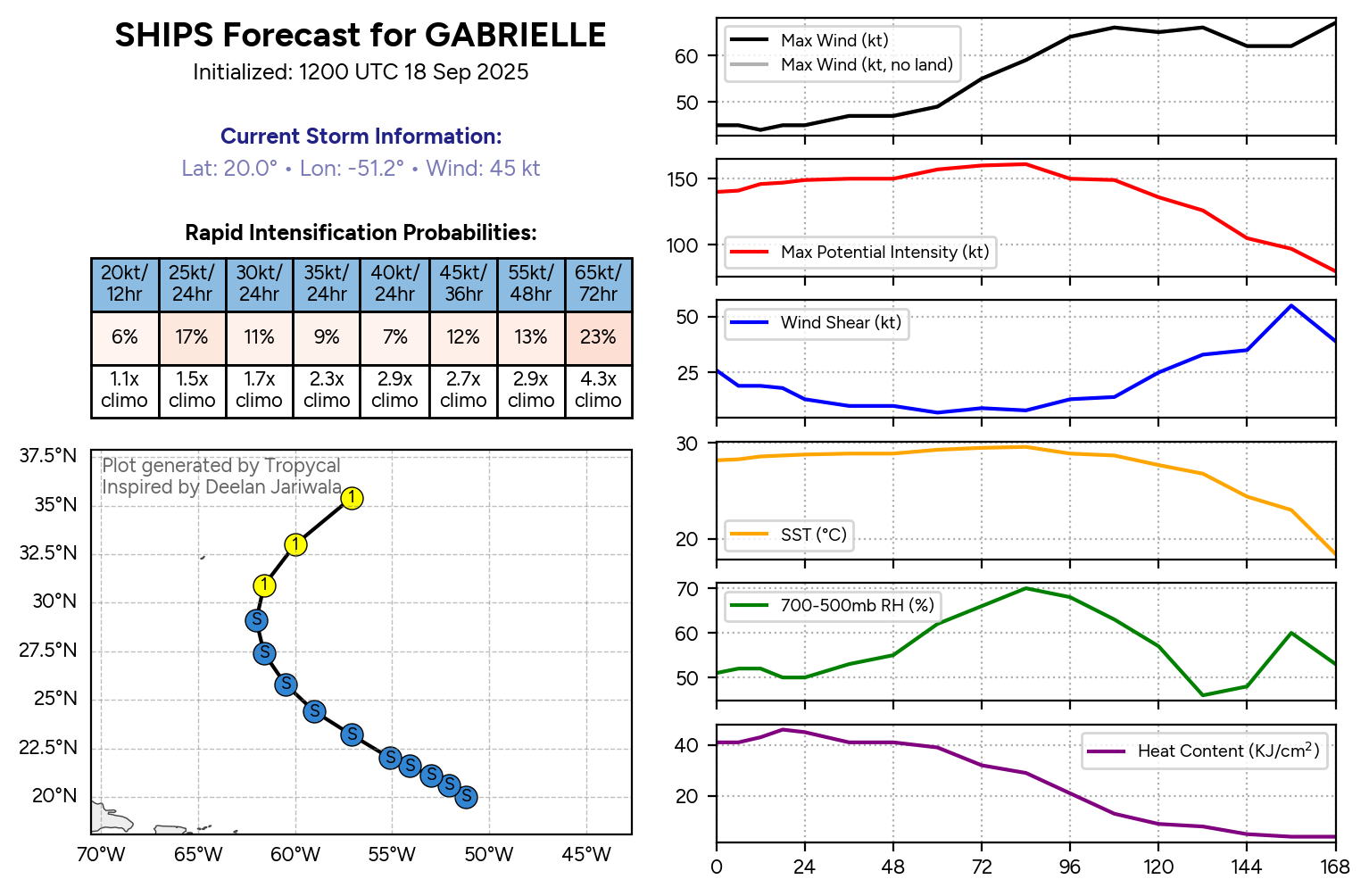
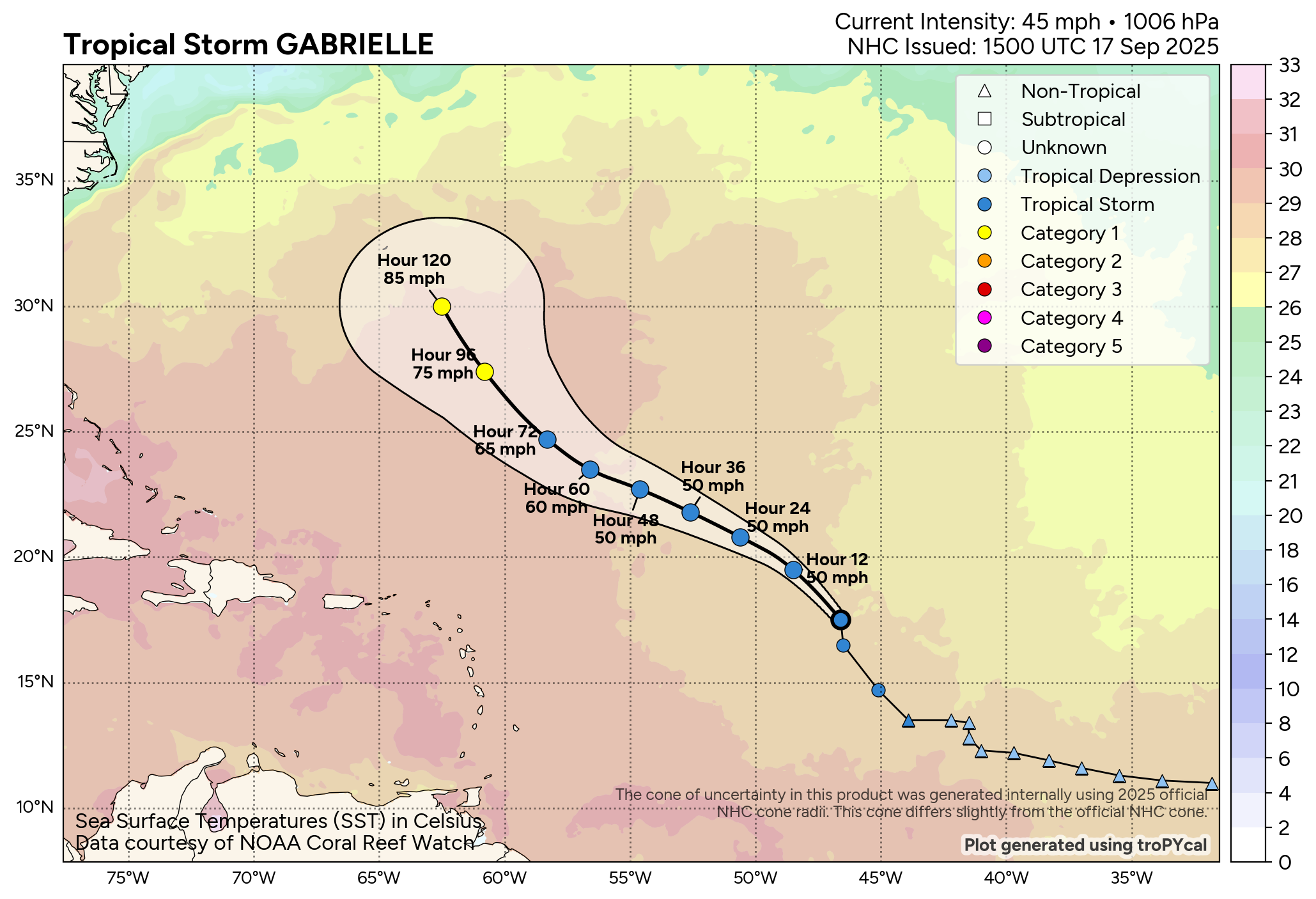
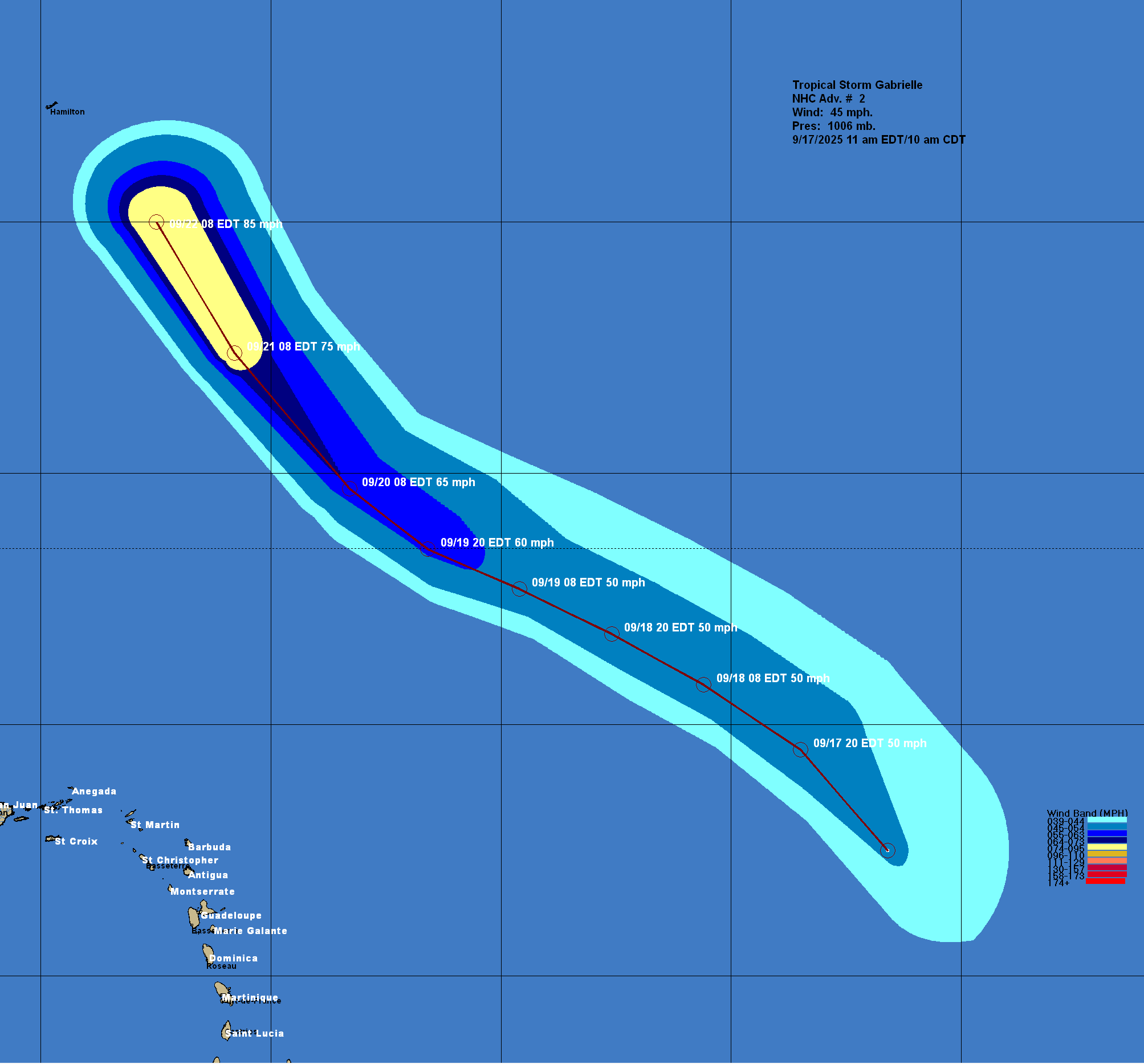
Model Track Forecast:
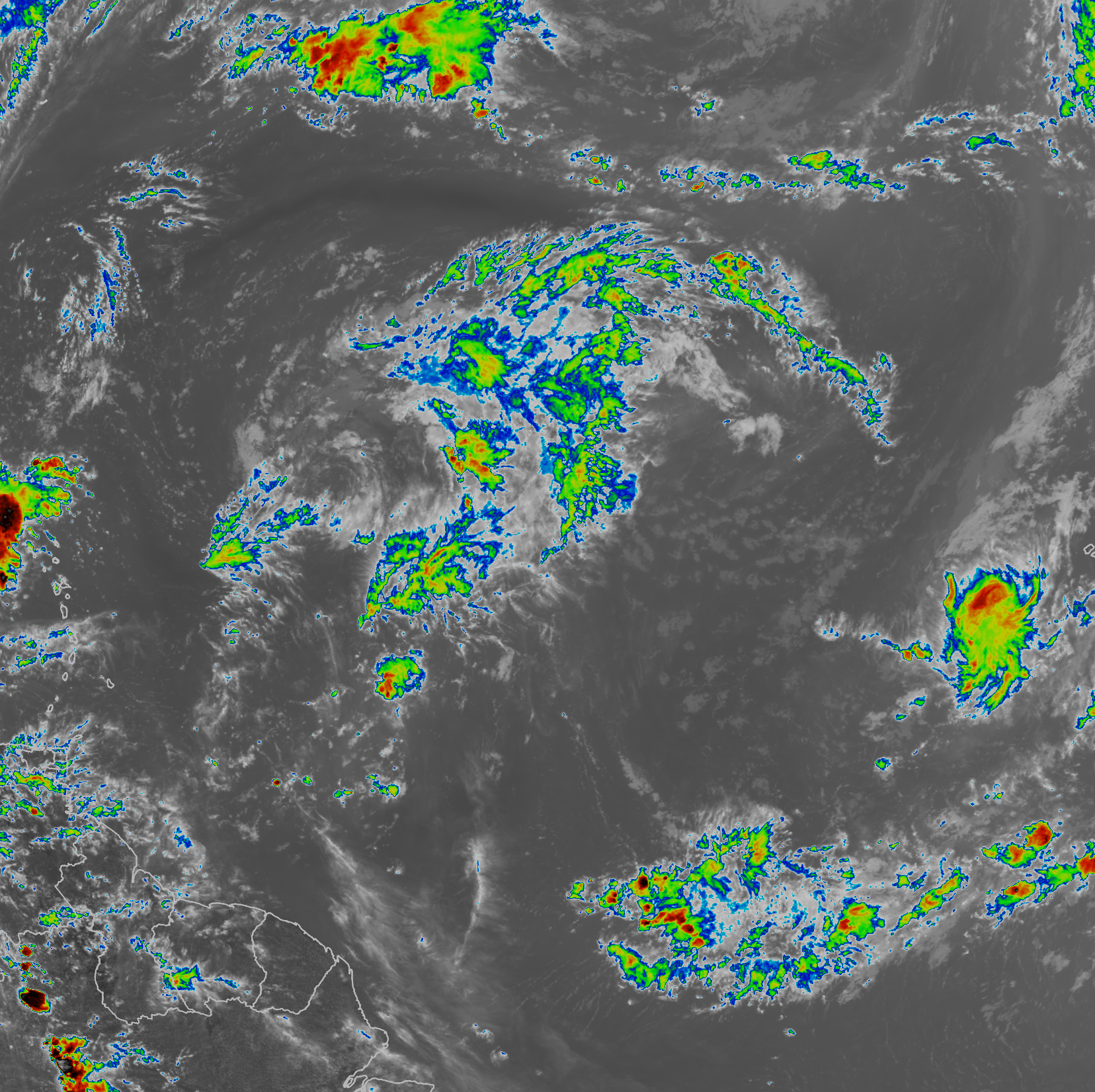
Satellite Imagery:

Invest 98-L Located Over The Bay Of Campeche: I’m also keeping a very close eye on Invest 98-L, which is located in the Bay of Campeche today.

Satellite imagery indicates that there is deep, but disorganized convection occurring with this system. Additionally, there seems to be some spin noted in satellite loops.

The Bay of Campeche and the southwestern and western Gulf is an area that can overproduce in terms of tropical development. The shape of the coastline in this area can increase the spin of any disturbances moving through the area causing them to quickly develop into a tropical system.

What is concerning is that the environmental conditions are quite favorable for development due to low amounts of wind shear. Fortunately though, Invest 98-L has a limited amount of time to be over water as it’ll be moving inland near the Texas-Mexico border by late Friday.

All-in-all, it would not surprise me at all to see Invest 98-L become a depression or even a low end tropical storm before it moves inland over northern Mexico and South Texas late Friday.

Even if Invest 98-L does not develop into a depression or a tropical storm, it will bring locally heavy rainfall across the lower Texas coast and the Lower Rio Grande Valley starting Friday afternoon and continuing through Saturday.

Model Track Forecast:

Satellite Imagery:


Also Watching A Couple Of Other Tropical Waves That’ll Be Pushing Into The Eastern Atlantic: There are a couple of other tropical waves that’ll be pushing off of the coast of Africa into the far eastern Atlantic over the next several days.

Some of the model guidance are showing that the more westward positioned tropical wave may try to develop into a tropical system as it heads westward into the central Atlantic by the middle part of next week. In fact, the ensemble model guidance seems to suggest this wave may take a more southerly track and be more of a threat to the eastern and northeastern Caribbean around late next week.

The additional waves pushing off of Africa will be watched closely as we get into next week. That said, I wouldn’t stress or worry about it right now.

The next tropical weather discussion will be issued on Friday.
Filed Under: CWS Weather Discussions

Erin Is Expected To Become A Hurricane By Later This Week & Will Pass Well North Of The Leeward & Virgin Islands

Wednesday, August 13, 2025 10:31 am by Rob Lightbown

Tropical Storm Erin: Satellite imagery today indicates that Erin is a little better organized with a small area of deep convection noted. That said, some easterly wind shear, dry air and marginally favorable ocean water temperatures are affecting the storm and because of this, it has not been able to strengthen significantly.

Erin is heading in a westerly direction and is now located about halfway between the Leeward Islands and the coast of Africa. The further west Erin moves, the more favorable the environmental conditions will be. Because of this, I expect Erin will become a hurricane by about Friday and probably will become a major hurricane as it is passing to the north of the Leeward Islands, the Virgin Islands and Puerto Rico during this weekend.

Even though Erin is moving on a westward track, it is expected that a weakness in the high pressure ridge to the north of the storm will help to turn it to the west-northwest at the end of this week and during this weekend. This turn will lead Erin to pass safely to the north of the Leeward Islands, the Virgin Islands and Puerto Rico during this weekend.

Model Guidance: The overall model guidance are in excellent agreement in forecasting that Erin will be of no threat to the eastern or northeastern Caribbean.

Additionally, track model guidance seem to agree that Erin will turn to the north into that weakness in the high pressure ridge. Guidance does disagree on where exactly this turn to the north will occur.

The spread in the ensemble members range from a turn near 60-65 West Longitude, which would lead to a significant threat to Bermuda, to a turn near 70 West Longitude, which would lead to a miss to Bermuda and the East Coast of the United States, but could raise the threat slightly for Atlantic Canada.

Here Are My Thoughts: I am extremely confident that Erin will miss the Leeward Islands, the Virgin Islands and Puerto Rico to the north as the storm finds a weakness in the high pressure ridge.

I do want to caution those of you in the Leeward Islands, the Virgin Islands and Puerto Rico to still watch the progress of Erin. While a direct impact from the storm is highly unlikely, I do think that squalls of heavy rain and gusty winds on the southern periphery of the storm may affect the northern Leeward Islands, the Virgin Islands and Puerto Rico beginning on Friday and continuing through this weekend. In addition, rough surf is also going to be a threat across much of the northeastern Caribbean, especially for the Atlantic facing beaches late this week through this weekend.

Turning to next week, I do have increasing amounts of confidence that Erin should find itself caught in that weakness in the high pressure ridge. Because of this, it looks more likely than not that the storm will turn to the northwest and then eventually to the north somewhere over the western North Atlantic.

Where I think the forecast has some uncertainty attached to it is where exactly this turn to the north will occur as there is a large range in possible tracks that the storm could take. That being said, I think that there is a very low chance for a direct hit on the East Coast of the United States and Bermuda has a much bigger potential threat from Erin around the middle part of next week.

Because of this, I urge all interests on the island of Bermuda to closely monitor the progress of Erin as it could be a big time threat for you by about middle part of next week.

For those of you along the East Coast of the United States, I would still keep a very close eye on the progress of Erin, even though the chances of a direct impact are low, as of this time. The higher threat from Erin along the East Coast of the United States next week looks to be high surf, rough seas and the threat for rip currents.

Model Track Forecast:

Satellite Imagery:


Elsewhere Across The Atlantic, Caribbean & Gulf: One other disturbance that I am keeping an eye on is a tropical wave located over the Yucatan Peninsula. This wave is producing some disorganized shower and thunderstorm activity today & the entire disturbance is expected to push into the Bay of Campeche and the southern Gulf as we get into Thursday and Friday.

A look at the environmental conditions out ahead of this wave reveals that the wind shear values are favorable for development and because of this, I am going to keep an eye on this disturbance, just in case.

It should be noted though that none of the model guidance and their ensemble counterparts forecast any sort of development from this disturbance and most likely, nothing significant should come from this wave.

That said, it is August in the Gulf with a disturbance that is expected to move through an area of the southern Gulf that has a history of spinning up storms quickly due to the curvature of the Bay of Campeche.

This disturbance is expected to reach the northeastern Mexico and lower Texas coast during Friday into Saturday.

So, while I will be keeping a close eye on this wave, I’m not overly concerned that we’re going to see any sort of development from it.

The next tropical weather discussion will be issued on Wednesday.

Filed Under: CWS Weather Discussions

Invest 97-L Will Become Tropical Storm Erin At 11 am This Morning & Is Expected To Move Across The Atlantic Throughout This Week Eventually Becoming A Hurricane

Monday, August 11, 2025 10:26 am by Rob Lightbown

Invest 97-L Located Over The Eastern Atlantic: It appears that Invest 97-L is extremely close to becoming a depression today & in fact, it would not surprise me to see the National Hurricane Center upgrade it to a Tropical Depression at 11 am EDT today.

NOTE – Just as I was finishing writing today’s discussion, I received a message from NHC saying that this system is being upgraded to Tropical Storm Erin at 11 am EDT.

A look at satellite imagery reveals that the shower and thunderstorm activity associated with Invest 97-L is looking pretty healthy & concentrated. Further analysis reveals that Invest 97-L may be producing up to 40 mph maximum winds, based on satellite data. If this is the case, then NHC may end up skipping the depression designation & immediately upgrading it to a tropical storm.

Analysis of the environment around Invest 97-L indicates that this system is being impacted by easterly wind shear & this, combined with cooler ocean water temperatures, should put a limit on how much it strengthens over the next 2 to 3 days or so.

Beyond this, the environmental conditions become much more favorable for strengthening towards the end of this week & because of this, I fully expect this system to be our first hurricane of the season.

Model Guidance: The overall model guidance are in really good agreement with their forecasts of the track of Invest 97-L. They seem to strongly suggest that this system will turn back to the west by Tuesday and head in a westerly direction through Wednesday into Thursday.

From there, guidance is still in very good agreement in showing this system turning a little more to the west-northwest and passing very safely to the north of the Leeward Islands and the Virgin Islands by Saturday.

Looking beyond this, the model guidance seems to suggest that a weakness will develop between a high pressure ridge over the Gulf and another high pressure ridge over Africa. This weakness should help to steer this system, likely Hurricane Erin at that point, to turn much more to the northwest. Usually from here, these storms will continue turning to the north and track out into the open Atlantic & probably threatening Bermuda along the way. More than likely, this will probably actually occur.

That said, there is some uncertainty in the guidance on whether the Gulf high pressure tries to build eastward and bridge the gap with the high pressure ridge over the central and eastern Atlantic. If there is any bridging in that weakness in the high pressure ridge, it could cause this system to try to track closer to the Bahamas, the East Coast of the United States and Atlantic Canada.

Here Are My Thoughts: It looks more likely than not that the environmental conditions around this system will favor strengthening throughout this week. Because of this, it looks likely that this system will be a hurricane by the end of this week.

I also think that it’s pretty likely that Invest 97-L will pass very safely to the north of the Leeward Islands and the Virgin Islands by about Saturday & because of this, I think that there isn’t anything to be concerned about in terms of impacts for the eastern and northeastern Caribbean from this system, except for swells later this week through this weekend.

Looking further down the road, I think we may still be a few more days away from absolutely ruling out a direct impact to the East Coast of the United States or Atlantic Canada. The reason why is because there is uncertainty as to how sharp of a turn to the northwest and north will occur with this system.

Because of this, there are a couple of scenarios that could play out next week with this system:

The first scenario is for the weakness in the western Atlantic to be strong enough to turn this system northward and northeastward sparing the East Coast of the United States and Atlantic Canada from a direct hit. In this scenario, Bermuda could very well be threatened, if not impacted as this system turns to the north and northeast.

The second scenario is for the upper level high pressure ridge to build back in and steer this system towards the East Coast of the United States and Atlantic Canada.

My feeling as of right now is that future Hurricane Erin should ultimately head out into the open Atlantic and not be a threat to the US East Coast. That said, Bermuda and Atlantic Canada definitely needs to keep close tabs on how sharp the north and northeast turn is next week as many guidance members do point to a threat to Bermuda and then to Nova Scotia and Newfoundland.

The Bottom Line Is That the trends for a hit on the East Coast of the United States and the Bahamas are decreasing. That said, I want to give it a couple of more days until I can absolutely assure you that the US East Coast is safe from future Erin.

Model Track Forecast:

Satellite Imagery:


What Else Is Behind Invest 97-L: A look at satellite imagery of what’s behind Invest 97-L/Erin shows that there is another wave right on the coast of western Africa. This wave may have some chance to develop as it heads westward across the Atlantic. It should be noted that only the AI models are showing development of this wave, with other models such as the GFS and European models showing no development at all. I am skeptical of using the AI models as they haven’t done very well this season in their forecasts of development.

For now, it’s a wave to just keep an eye on, but I’m not urgently concerned that it’ll develop anytime soon.

The next tropical weather discussion will be issued on Tuesday.

Filed Under: CWS Weather Discussions

Invest 97-L Over The Eastern Atlantic Is Close To Becoming A Tropical Depression & Will Be A System To Closely Monitor This Week As It Traverses The Atlantic

Sunday, August 10, 2025 11:28 am by Rob Lightbown

Invest 97-L Located Over The Eastern Atlantic: Satellite imagery and weather analysis reveals that a low pressure system located over the eastern Atlantic about halfway between the coast of Africa and the Cabo Verde Islands is becoming better organized today. This disturbance is labeled Invest 97-L by the National Hurricane Center.

A look at satellite imagery today shows that while the overall circulation with Invest 97-L is becoming better organized, the convection with it is still disorganized. That said, Invest 97-L is very close to becoming a depression and I suspect it may get that upgrade as soon as later today or on Monday.

Invest 97-L is currently moving in a northwesterly direction and because of this, it will likely bring quite a bit of squally weather to the Cabo Verde Islands starting this afternoon and lasting through tonight and Monday.

Let me discuss what the model guidance is showing and then go into my analysis of what may occur with Invest 97.

Model Guidance: The track model guidance are in good agreement in showing Invest 97-L tracking in a northwesterly direction over the next day or so before it turns back to the west. A majority of the track model guidance then shows Invest 97-L staying well north of the Lesser Antilles by Friday and Saturday with little or no impact to any of the eastern or northeastern Caribbean.

The track model guidance has the support of all of the ensemble model guidance in which a large majority of the members showing a track that keeps Invest 97-L well north of the Lesser Antilles by Saturday.

Beyond this, the guidance diverges quite a bit once we get into next week (week of August 18) and this should absolutely be expected for a 7-plus day forecast. The range in the ensemble guidance by next Monday, August 18 ranges from a storm in the Bahamas that could threaten and impact the East Coast of the United States all the way to a storm curving northward towards Bermuda and then into the open Atlantic.

I want to reiterate what I wrote a couple of days ago, be very wary of anyone posting a model map on social media because no one or no one model knows exactly where Invest 97-L is going to end up tracking in 7-14 days from now. Don’t fall for the social media hype on this system. Stick with us because we’re going to guide you through every step with this system.

Here Are My Thoughts: Invest 97-L is likely to continue organizing over the eastern Atlantic and will very likely become a depression between later today and about Tuesday. It should also continue heading in a northwesterly direction before it begins to turn back to the west along about the 17-18 North Latitude line.

Turning to the period from about Wednesday to Friday of this upcoming week, it seems likely based on the excellent agreement among the guidance that Invest 97-L will head in a west-northwesterly directly and this should keep this system far enough north to avoid the Lesser Antilles. That being said, if you are in the northern Leeward Islands, the Virgin Islands or Puerto Rico, I would keep very close watch on Invest 97-L, just in case it turns to the west earlier leading a track lower in latitude. Additionally, I do think that this system will strengthen into a tropical storm by or before Wednesday and then become a hurricane by the end of this week.

As we get into next weekend (August 16-17), the weather pattern looks to become more complicated and thus, the potential track of Invest 97-L becomes more complicated and uncertain. An upper level high pressure ridge over the central and eastern Atlantic may weaken enough to allow Invest 97-L to turn more to the northwest. How sharp of a northwest turn occurs is something that is uncertain.

On one hand, if we see a sharp turn to the northwest, it probably will continue that turn more to the north leading to a path that takes it towards Bermuda and then out into the open Atlantic.

On the other hand, should we turn a much more lazy turn to the northwest, it could get caught underneath a building high pressure system during next week (week of August 18) leading to this system threatening the Bahamas and the East Coast of the United States.

The key weather feature to watch around next weekend and beyond is the strength of the high pressure ridge over the western Atlantic. If we see a strengthening and expanding high pressure ridge, then the chances would increase for Invest 97-L to impact the East Coast of the United States. On the other hand, should we see a narrower and weaker high pressure ridge, it would give Invest 97-L an out leading it to turn out into the open Atlantic.

My feeling right now is that the chances are higher that Invest 97-L will end up being steered northward towards Bermuda and eventually out into the open Atlantic. That said, this is something that has a low amount of confidence.

That said, to be bluntly honest, I still have no idea at all where Invest 97-L will ultimately track next week (week of August 11). Because of this, my recommendation is that everyone from the Florida Peninsula and the Bahamas northward up the entire East Coast of the United States and Atlantic Canada should monitor the progress of Invest 97-L closely.

Model Track Forecast:

Satellite Imagery:

Also Wanted To Mention The Tropical Disturbance Over The Southeastern Gulf: I wanted to make a mention about the area of convection that’s located over the southeastern Gulf as its presentation on satellite imagery and radar loops have gotten more interesting.

This disturbance has brought extremely heavy amounts of rainfall to southwestern parts of Florida this morning with areas around Sanibel, Captiva and Pine Island receiving up to a foot of rain with more on the way.

Analysis reveals that there seems to be some low to mid-level circulation associated with it. A majority of the circulation seems to be occurring just west of Naples. Additionally, the wind shear values over the eastern Gulf are favorable for development.

The combination of the deep convection that’s occurring, along with low amounts of wind shear and the low and mid-level circulation that seems to be presence says to me that we need to keep an eye on this disturbance, in case it spins up unexpectedly into a tropical system.

Right now, none of the model guidance are forecasting any sort of development of the southeastern Gulf disturbance and it is expected to head in a northwesterly direction reaching the north-central Gulf Coast by Monday night or Tuesday morning.

I will certainly be keeping an eye on this area of convection and will have updates if it does begin to spin up into a tropical system.

The next tropical weather discussion will be issued on Monday.

Filed Under: CWS Weather Discussions

A Tropical Wave Moving Across The Atlantic Next Week Needs To Be Watched Extremely Closely

Friday, August 8, 2025 1:12 pm by Rob Lightbown

A Tropical Wave Now Moving Off Of The Coast Of Africa Is One To Really Watch Next Week: Satellite imagery and weather analysis reveals that there is a tropical wave that is about to push off of the coast of Africa into the far eastern Atlantic. Satellite loops indicates that there is already some spin occurring with the wave. Also, analysis reveals that the amount of wind shear over the eastern tropical Atlantic is low enough to support development.

A large majority of the model guidance are latching onto this particular tropical wave as being one that could not only significantly develop, but also threaten the northeastern Caribbean in about a week from now and then possibly threaten the US coastline in about 10-14 days from now. More on that in a bit.

Before I get into discussing the model guidance, I want to point out that we are still a few days away from anything even forming. I do think that development will be very slow to occur for a while as overall environmental conditions across the eastern and central tropical Atlantic are marginally favorable for development. This means that any small deviations on where or when this system consolidates and forms can have huge implications on where it will eventually track and how strong it could be. This means that you should take any model guidance for a 10-plus day forecast with a pound of salt.

As for the model guidance – First, I don’t really look at the operational models for a forecast this far out because their exact forecasts for a 10-14 day forecast can change many, many times and any one solution should not be trusted. Instead, I like to look at the ensemble model guidance for a 7-14 day forecast as it gives you a range of possible solutions.

The GFS ensemble model guidance seems to suggest that we should see a west-northwesterly track over the next week putting this system anywhere from over the northeastern Caribbean to north of the Caribbean by about next Saturday. From there, the GFS ensemble members diverge on their forecasts with some showing a turn to the northwest while other members seem to forecast a generally westward track. This leads to many different outcomes from a curve northward taking this system towards Bermuda by about August 18 to a system that continues to track into the Bahamas by August 18 followed by a threat or impact to the East Coast of the United States by about August 20.
As for the European ensemble model guidance, it also suggests a track that either leads to this system tracking over or to the north of the northeastern Caribbean by next Saturday. That said, it should be pointed out that the majority of the ensemble members do show this system just missing the northeastern Caribbean to the north. From there, the European ensemble model members diverge a lot with some showing a turn to the north towards Bermuda while others seem to show a northwestward track towards the Carolinas, the Mid-Atlantic coast and New England by about August 20. There are other members that show a track towards the Bahamas and the southeastern coast of the United States between August 18 and 20.

Here Are My Thoughts: While I do think that this tropical wave definitely needs to be watched extremely closely next week as it heads across the eastern and central tropical Atlantic, I am not ringing the alarm bells for anyone. Beware of the social media hype on this system & don’t believe it. No one or no model knows exactly where this system is going to end up going.

I do think that this wave will struggle for a while as it heads west-northwestward across the eastern and central tropical Atlantic over the next several days. This is due to marginally favorable ocean water temperatures. This should change by the time this wave reaches about 55 West Longitude around Thursday when it should start developing due to more favorable conditions.

Additionally, I think there is the possibility that this system could be a tropical storm by the time it reaches about 60 West Longitude. Given the ensemble range, it’s possible that it could be either right over the northeastern Caribbean or located just north of the northeastern Caribbean when it reaches the 60 West Longitude line around next Saturday.

Beyond this, I’ll be honest with you and say that I have no idea at all where exactly this system will end up tracking. Guidance seems to hint that there may be a weakness in the high pressure ridge steering this system & if this occurs, it could mean a turn to the northwest and north. It’s unknown of how sharp this turn might be & that’ll be extremely important. A really sharp turn to the north would lead to this system heading out into the open Atlantic & perhaps threatening Bermuda. On the other hand, a much more gradual turn to the northwest would lead to this system potentially threatening the Bahamas and then a large part of the East Coast of the United States.

Bottom line is that the environmental conditions look very favorable for development and then strengthening of a tropical system & because of this, I am going to be keeping very close tabs on this particular tropical wave. Just know that this wave is nothing to be overly concerned about or worried about, for now.


Elsewhere Across The Atlantic, This Is What Else We’re Watching:

Low Pressure Off Of The North Carolina Coast: It appears that a low pressure system located between the coast of North Carolina and Bermuda probably will not develop at all. It is expected that this low pressure system will head in a northeastward direction into the open Atlantic this weekend where it’ll merge with a frontal boundary.

Invest 96-L Located Over The Central Tropical Atlantic: It appears that Invest 96-L is struggling to produce convection over the central Tropical Atlantic near about 41 West Longitude. I do think that Invest 96-L will continue to struggle to develop this weekend as it begins a turn to the northwest and north. This will keep this system out over the open Atlantic with no threat to anyone.

It’s possible that Invest 96-L will find itself in a more favorable environment for development by the first half of next week as it tracks well east of Bermuda & this is when it might develop into a depression or a tropical storm.

In any case, Invest 96-L, whether it develops or not, will turn out into the open Atlantic well before it gets near Bermuda.

The next tropical weather discussion will be issued on Monday.

Filed Under: CWS Weather Discussions

A Bit Of A Burst Of Tropical Activity Is Expected Across The Atlantic Over The Next Week Or So

Wednesday, August 6, 2025 10:37 am by Rob Lightbown

Tropical Storm Dexter: Dexter is producing deep amounts of convection as it heads northeastward towards the open Atlantic. It is expected that the storm will become post-tropical by Thursday and then reach the area north of the Azores as a powerful non-tropical low pressure system.

From there, the low pressure system that was once Dexter should reach the British Isles by Tuesday and Wednesday of next week as a strong storm system.


Low Pressure Offshore Of The Southeast US Coast: Weather analysis today revealed that a low pressure system has formed offshore of the US Southeast coast. Even though a low pressure system has formed, satellite imagery indicates that there is only limited amounts of convection occurring with this system.

It is looking increasingly more likely that this low pressure system will stay offshore of the Carolina coastline and not be a direct impact. This further offshore track may end up lessening the heavy rainfall threat to the Southeast US coast over the next several days.

Any development into a tropical depression or even a tropical storm will be very slow to occur and if it does happen, it probably wont occur until this weekend as this system passes to the east of the outer banks of North Carolina. From there, this system is expected to turn to the northeast and pass well offshore of the New England coast by early next week.

The main impact from this system, whether it develops or not, will be locally heavy rainfall and rip currents. Rainfall totals of 2 to 4 inches look likely along the immediate coasts of North Carolina and South Carolina from Thursday through Sunday.

Forecast Rainfall Totals From Thursday Through Sunday:


A Tropical Wave Over The Eastern Tropical Atlantic May Develop Into A Tropical System In The Central Tropical Atlantic Late This Week Or This Weekend: Satellite imagery today showed that a tropical wave located over the eastern Tropical Atlantic near about 33 West Longitude is producing disorganized convection.

It seems likely that we will see slow development of this tropical wave as it moves in a west-northwest to northwest direction. Because of this slow development, it seems possible that this wave will develop into a depression or even a tropical storm by this weekend.

All guidance seems to now point to this system curving to the northwest and north well before it reaches the Lesser Antilles. The reason for this is due to a weakness in a high pressure ridge over the central Atlantic that’ll allow this system to turn northward before it’s able to be steered by a strong western Atlantic high pressure ridge.

Most guidance are pointing to this system staying to the east of Bermuda during the first half of next week. That said, interests in Bermuda should keep an eye on this particular wave, in case it tracks just far enough west to be an issue.

Bottom line is that this wave, whether it develops or not, poses no threat at all to the Lesser Antilles, the Caribbean, the Bahamas or the United States.


Another Tropical Wave Pushing Off Of The Coast Of Africa By This Weekend Could Be Trouble: I think that we are going to have to keep very close tabs on a tropical wave that’ll be pushing off of the coast of Africa by the end of this week or early this weekend as it could end up being a real big trouble maker.

The weather pattern for this weekend through next week is expected to consist of a strong high pressure ridge which will guide this system due westward next week towards the Caribbean or the southwestern North Atlantic where conditions are expected to be favorable for development.

Model guidance such as the GFS and the European models are pointing towards this system to impact the Lesser Antilles between Wednesday and Friday of next week. Beyond this, guidance seems to suggest diverging forecast tracks with some ensemble members showing a track from east-southeast to west-northwest across the Caribbean. Other ensemble members suggest a track towards the Bahamas by late next week and next weekend.

At this point, it would be pure speculation to say where exactly this wave will track or how strong it could become. As I mentioned yesterday, the steering winds next week will likely steer this wave due westward & this could very well put the Lesser Antilles at risk of seeing a tropical system between about Wednesday and Friday of next week.

My recommendation to those of you in the Lesser Antilles is to closely monitor the progress of this particular tropical wave once it splashes down in the eastern Atlantic around Friday or Saturday.


Eastern Gulf Low Pressure Development Possible This Weekend: Satellite imagery and weather analysis indicated that there is a trough of low pressure located over the Bahamas today. While there is no low or mid-level spin with this system, the environmental conditions are favorable for development.

It is expected that this low pressure trough will move westward reaching the southeastern Gulf by late Thursday or Friday where it might need to be watched for signs of development.

Some of the model guidance do show a low pressure center forming from this trough that moves northward across the eastern Gulf this weekend reaching the northeastern Gulf coast by about Monday.

Overall, I think that the chances of tropical development of any low pressure system that forms over the eastern Gulf this weekend is around 20-30 percent or so.

One thing that this system will do, whether it develops or not, is to bring a wet several days to the central and eastern Gulf coast from later today right through this weekend.

I will be keeping an eye on this system and will have updates as needed.

The next tropical weather discussion will be issued on Friday.
Filed Under: CWS Weather Discussions

Dexter Will Push Out Into The Open Atlantic While Development Could Occur Near The Coasts Of South & North Carolina Later This Week; A Couple Of Tropical Waves Over The Central & Eastern Tropical Atlantic Will Need To Be Watched For Possible Development

Tuesday, August 5, 2025 12:55 pm by Rob Lightbown

Tropical Storm Dexter: Dexter is headed out in the open Atlantic and is currently located to the northeast of Bermuda. It’s expected that Dexter will continue moving to the northeast into the open Atlantic with no threats to land.

Additionally, it is anticipated that Dexter will become a pretty strong post-tropical storm in a couple of days from now.

All-in-all, Dexter is nothing to be concerned about and because of that, let’s take a look at what else is going on.


Tropical Development Is A Possibility Near Coastal Parts Of South Carolina & North Carolina Later This Week: Satellite imagery and weather analysis reveals that there is a trough of low pressure located just east of the Bahamas. It is anticipated that this trough of low pressure will head in a northwestward towards the coastal Carolinas over the next 2-3 days or so. Additionally, it seems possible that a low pressure system might form from this trough in a couple of days from now.

The environmental conditions around this low pressure system are expected to be favorable enough to support slow development. This means that development of this system into a depression or a tropical storm is possible as it heads slowly northward between Friday and Sunday where it’ll reach the eastern parts of North Carolina by Sunday.

That said, it doesn’t appear that this system will become all that strong & may strengthen just enough to be considered a depression or a low-end tropical storm that affects eastern parts of South Carolina and eastern parts of North Carolina this weekend.

Whether this system develops into a tropical cyclone or not, the main impacts will be heavy rainfall late this week through this weekend across areas from the Florida Peninsula through the coastal Carolinas where rain totals of 3 to 5 inches can be expected. Additionally, rip currents are expected along the coasts of North Carolina and South Carolina later this week through this weekend.

Bottom line is that this system definitely should be watched for potential development, especially given how close it’ll be to land.

Rainfall Totals From Later This Week Until Early Next Week:


Tropical Development Is Possible By Late This Week Over The Central Tropical Atlantic: Analysis today reveals that there is a tropical wave located over the far eastern tropical Atlantic near about 33 West Longitude. Satellite imagery shows that there is some increase in convection associated with the wave as compared to what it looked like yesterday.

The environmental conditions across the eastern tropical Atlantic are favorable for development and these favorable conditions are expected to exist as this wave pushes into the central Tropical Atlantic by later this week. Because of this, development into a depression or a tropical storm is quite possible late this week or this weekend. That being said, any development that does occur is likely to be slow and again, probably wont occur for a few days.

The model guidance are split in what they want to do with this wave and how much development occurs from it.

The European model and its ensemble members forecast quicker development and a faster turn to the northwest into the central Atlantic by this weekend. This leads to a system that stays way out in the Atlantic with no threats at all.

On the other hand, the GFS model and its ensemble members show a weaker system that takes its time to develop. Because of this, the GFS model forecasts a much more westward and west-northwestward track that leads to this system tracking near or just north of the northeastern Caribbean by late this weekend and early next week.

Beyond this, the GFS model and its ensemble members show the conditions potentially becoming quite favorable for development and strengthening over the southwestern North Atlantic next week. Because of this, if this wave does not curve to the northwest and north and instead drives westward and west-northwestward, it would mean we would really have to watch it very closely.

Here Are My Thoughts: I’m skeptical of the European model’s forecast of quick development and instead I think that we’re probably looking at much slower development, like what the GFS model seems to show. This means that if this wave does wait to develop until it makes it past 60 West Longitude, it may become an issue in terms of being a threat.

The weather pattern setup for next week when this system is possibly pushing into the southwestern North Atlantic is going to include an upper level high pressure system that sets up over the western Atlantic. This high pressure ridge could guide any developing system westward towards the Bahamas and the US East Coast.

This means that while the wave is of no threat for at least the next several days, it could become a threat next week once it passes by the northeastern Caribbean and heads for the Bahamas.

It goes without saying that I will be keeping a very close eye on this tropical wave over at least the next several days. For now though, this wave is nothing to be overly concerned or worried about and is something to just keep an eye on.


Another Tropical Wave Pushing Off Of The Coast Of Africa In A Few Days Has A Better Chance Of Becoming Something To Be Concerned About: Yet another robust tropical wave will be pushing off of the coast of Africa late this week and I do think this wave and the tropical wave right behind this one may actually have a slightly higher chance of organizing and developing. Also these two waves probably will track lower in latitude and thus could be a concern to the Lesser Antilles in about a week from now.

At this point, it would be pure speculation to say what will happen when these two waves splash down in the eastern Atlantic at the end of this week. I will say though that the steering winds next week should steer these two waves due westward reaching the Lesser Antilles by the middle part of next week. Because of this, these two waves also need to be watched very closely in the coming days.


One Final Item To Mention: The eastern Gulf might need to be watched for another low pressure to spin up over this weekend. Some of the European ensemble model guidance members are hinting that a low pressure system may form over the eastern and northeastern Gulf this weekend and head for the northeastern Gulf Coast by early next week.

Should any low pressure system form and become organized, it could try to become a depression or a tropical storm. One thing that the stalled frontal boundary and any low pressure system will do is bring wetter than average conditions to the central and eastern Gulf Coast from later this week through this weekend into early next week.

So, this is yet something else to keep an eye on over the next several days.

The next tropical weather discussion will be issued on Wednesday.

Filed Under: CWS Weather Discussions

Invest 95-L Is Expected To Head Out Into The Open Atlantic While Additional Tropical Development Is Possible Near The Southeast US Coast Later This Week; Tropical Development Is Also Possible Over The Central Tropical Atlantic Mid To Late Week

Sunday, August 3, 2025 11:21 am by Rob Lightbown

Invest 95-L Located Offshore Of The North Carolina Coast: Satellite imagery and weather analysis indicates that there is a non-tropical low pressure system located about 200 miles or so offshore of the North Carolina coast. This low pressure system is producing deep amounts of convection near its center. Also, the wind shear values around this low pressure system are favorable for development.

It’s quite possible that this low pressure system will become a tropical or sub-tropical depression or tropical storm between now and Monday as it heads east-northeastward away from the East Coast of the United States and out into the open Atlantic. This means that even if Invest 95-L does develop into a depression or a tropical storm, it will not be a threat to any land areas as it will safely move out into the open Atlantic.


Additional Tropical Development Is Possible Near The Southeast US Coast Later This Week: Following close behind Invest 95-L, it looks quite possible that tropical development could occur near the Southeast coast of the United States by a little later this week. In fact, pretty much all of the model guidance are forecasting this to occur with the differences in the models found where this system might go.

The GFS model forecasts a system to form to the southeast of the North Carolina coast by mid-week and head towards eastern North Carolina by late this week. The GFS model then forecasts this system, which looks quite weak, to move into eastern North Carolina by about Saturday.

The Canadian model doesn’t forecast any sort of a secondary low pressure system.

The European model seems to hint at some sort of a tropical system to form to the north of the Bahamas by Wednesday and then track northward reaching the outer banks of North Carolina by Saturday.

The GFS ensemble model guidance certainly sees it as it has a cluster that are hinting at development just north of the Bahamas by Thursday. The ensemble members then diverge with some members showing a track westward into the Florida Peninsula or coastal Georgia while other members show a track northward into the Carolinas and the Mid-Atlantic states.

The European ensemble model guidance also seems to see the potential for some sort of development to the southeast of the North Carolina coast by Wednesday or Thursday. Ensemble guidance then diverges with some members forecasting tracks towards the Carolinas and the Mid-Atlantic, some members forecasting a track up towards New England and other members forecasting a track westward into northeast Florida and coastal Georgia.

Here Are My Thoughts: It seems that the system to watch for possible development will form to the southwest of Invest 95-L as it pulls out into the open Atlantic. This should occur by about Wednesday or so. An area of high pressure over the northeastern United States and Atlantic Canada should be able to push any system that tries to form to the west and northwest towards the US Southeast coast by late this week and next weekend.

For now, I’m going to go with a very low chance for development as I’d like to see its structure and what sort of environment it moves through before I raise the development chances. Those of you along the Southeast coast of the United States and especially those of you on the North Carolina coast should closely monitor the progress of this possible system.

Bottom line is that I will be keeping a close eye on this possible system and will more updates over the next few days.


Tropical Development Is Possible By Mid To Late Week In The Central Tropical Atlantic: A tropical wave is expected to push off of the coast of Africa over the next couple of days or so. This wave is expected to push west-northwestward across the eastern and then the central Tropical Atlantic throughout this upcoming week where conditions may be favorable for some development.

Model guidance such as the GFS ensemble models and the European ensemble models seem to suggest that anything that develops may travel far enough north in latitude to miss the Lesser Antilles completely and eventually head out into the open Atlantic. That said, there are a couple of ensemble members that do show a very close track to the northeastern Caribbean by about August 11.

The Google Deep Mind AI weather model has a large spread in where it thinks any system that forms this week over the central Tropical Atlantic. Some of its ensemble members show a safe track out into the open Atlantic well away from the Caribbean, the Bahamas or the US East Coast. Other members do threaten the northeastern Caribbean by next week and then go on to threaten the Bahamas by about August 12.
Here Are My Thoughts: As I mentioned a couple of days ago, the tropical wave that will be pushing off of the coast of Africa over the next day or two definitely needs to be watched as it heads westward this week.

The environmental conditions across the eastern and central Tropical Atlantic are marginally favorable for development. There is favorable conditions across areas near and east of 40 West Longitude. This turns into unfavorable environmental conditions from about 45 West Longitude and points west. This could mean that we might see development occur by mid-week and then anything that tries to form may then struggle due to the unfavorable conditions late this week as it moves into the central Tropical Atlantic.

The weather pattern this week across the Atlantic is expected to include a weakness in the high pressure ridge east of Bermuda. This means that if this wave does develop into a tropical storm this week, it would likely be turned out into the open Atlantic well before it reaches the Lesser Antilles. On the other hand, if this wave struggles and doesn’t develop at all, it could stay further south and move in the vicinity of the Leeward Islands next weekend before heading towards the Bahamas.

It goes without saying that I will be keeping a very close eye on this tropical wave as it heads westward this week. Those of you in the Leeward Islands and the northeastern Caribbean should monitor this wave closely, just in case.

The next tropical weather discussion will be issued on Tuesday.

Filed Under: CWS Weather Discussions

No Immediate Tropical Development Is Expected This Weekend Across The Atlantic, Caribbean & Gulf

Friday, August 1, 2025 2:07 pm by Rob Lightbown

With the turn of the calendar page, we are now entering the active months of the Atlantic hurricane season (August, September & October) where a large majority of the activity and impacts occur. Right now, there are no areas that warrant immediate concern in terms of tropical development across the Atlantic, Caribbean and Gulf.

There are a couple of areas, however, that I continue to keep an eye on:

The First Area That I’m Watching Is near and offshore of the Carolinas where a stalled frontal system will remain in place throughout this weekend into next week. Along this front, it is expected that at least a couple of low pressure systems will form and head east-northeastward into the open Atlantic.

It is possible that some sort of development could occur with the low pressure system that forms just offshore of the North Carolina coast on Sunday and Monday and heads east-northeastward into the open Atlantic. Model guidance such as the GFS model, the Canadian model and the European model and their ensemble counterparts seem to show this system organizing just enough to perhaps become a depression as it heads out into the open Atlantic next week.

All-in-all, if any of the low pressure systems do become a depression next week as they head east-northeastward into the open Atlantic, they will not pose a threat to any land & they likely will remain fairly weak.

It is something that I am keeping an eye on and I’ll have updates as needed.

The Second Item That I’m Watching Closely Is the potential for a notable uptick in tropical development chances starting as soon as later next week and continuing through the week of August 11. This potential uptick in tropical development chances will coincide with the upward motion pulse of the Madden Julian Oscillation, which will be pushing into the Atlantic Basin starting next week and will remain in place through the middle and possibly later parts of this month. This upward motion pulse will allow for conditions to be more conducive for any westward moving tropical waves to develop.

Model guidance such as the GFS ensemble model guidance and the European ensemble model guidance seem to agree that a tropical wave pushing westward across the central and eastern Tropical Atlantic may try to develop into a tropical system later next week as it approaches the Leeward Islands. The ensemble model guidance then seems to point towards anything that forms may track near the Bahamas and the Southeast coast of the United States by around August 13.

The ensemble model guidance has the support of the Google Deep Mind AI weather model, which also suggests a tropical wave becoming a tropical system before it reaches the Leeward Islands later next week. The ensemble members of the AI model then seems to suggest any tropical system to head for an area somewhere between the eastern Gulf and the southeastern coast of the United States by about August 13.

The tropical wave that the models are latching onto for potential tropical development later next week is currently located over western Africa. This wave is expected to push off of the coast of Africa into the far eastern Tropical Atlantic during this weekend and then head westward across the eastern and then central Tropical Atlantic during next week.

A look at the current environmental conditions across the eastern and central Tropical Atlantic reveals that the wind shear values aren’t all that favorable for development. There are strong amounts of wind shear found from about 40-45 West Longitude eastward to the coast of Africa. West of 45 West Longitude, the wind shear values do become more favorable for development and this is probably why the model guidance delay any sort of development until this wave approaches the Leeward Islands.

Here Are My Thoughts: I think that the tropical wave that’ll be pushing off of the African coast this weekend will certainly need to be watched closely as it heads westward across the eastern and central Tropical Atlantic next week.

Now I do think that this wave will struggle for a while due to sinking stable air and strong amounts of wind shear that’ll be found across the eastern and central Tropical Atlantic. These conditions may become more favorable near the Leeward Islands and because of this, tropical development may become a concern late next week into next weekend as this wave moves near or right over the Leeward Islands and the northeastern Caribbean.

Bottom line is that, I will be keeping a very close eye on this system next week as it heads westward from the coast of Africa to the Leeward Islands. That being said, I do think that the chances for development are quite low, probably less than 20 percent. The reason why is because I think the sinking stable air and strong wind shear may put quite a bite into this wave & even when the conditions become more favorable for development, there may not be much left of the wave to develop.

The next tropical weather discussion will be issued on Tuesday.

Filed Under: CWS Weather Discussions

  • « Previous Page
  • 1
  • …
  • 6
  • 7
  • 8
  • 9
  • 10
  • …
  • 14
  • Next Page »

© 2026. Website Developed by AnoLogix. Privacy | Legal | Terms of Use